
01
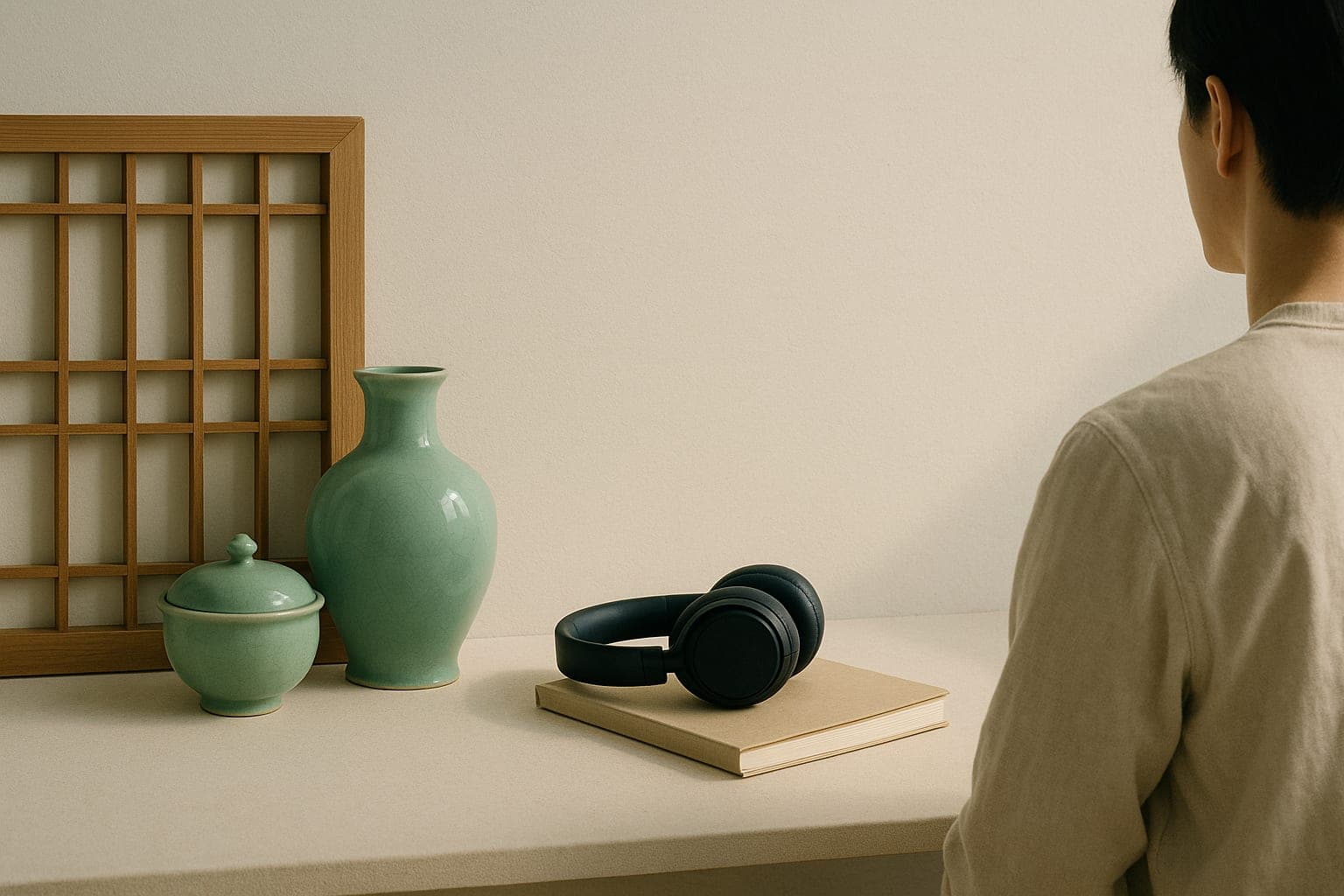
The spelling stays still. The speech does not.
Korean writing keeps every word in its dictionary shape, while a speaker slides final consonants forward and softens whatever gets in the way.
Korean listening practice
Listen to native audio, write down exactly what you heard, and let the difference between the two become the lesson.
No card required · Learn in English, practise in Korean
Across WELE, all languages · this month
2,284+
listening hours
42,148+
listening sessions
1,168+
active learners
5,395+
submissions
The listening gap
Most learners plateau in the same place: enough vocabulary to follow a transcript, not enough ear to follow a voice.
01
Korean writing keeps every word in its dictionary shape, while a speaker slides final consonants forward and softens whatever gets in the way.
02
The small grammatical markers you learned to place carefully are the first things a native speaker drops or swallows.
03
Hours of watching can leave your ear exactly where it started, because the text does the listening for you.
Inside a lesson
The interface stays quiet on purpose. Nothing competes with the audio for your attention.
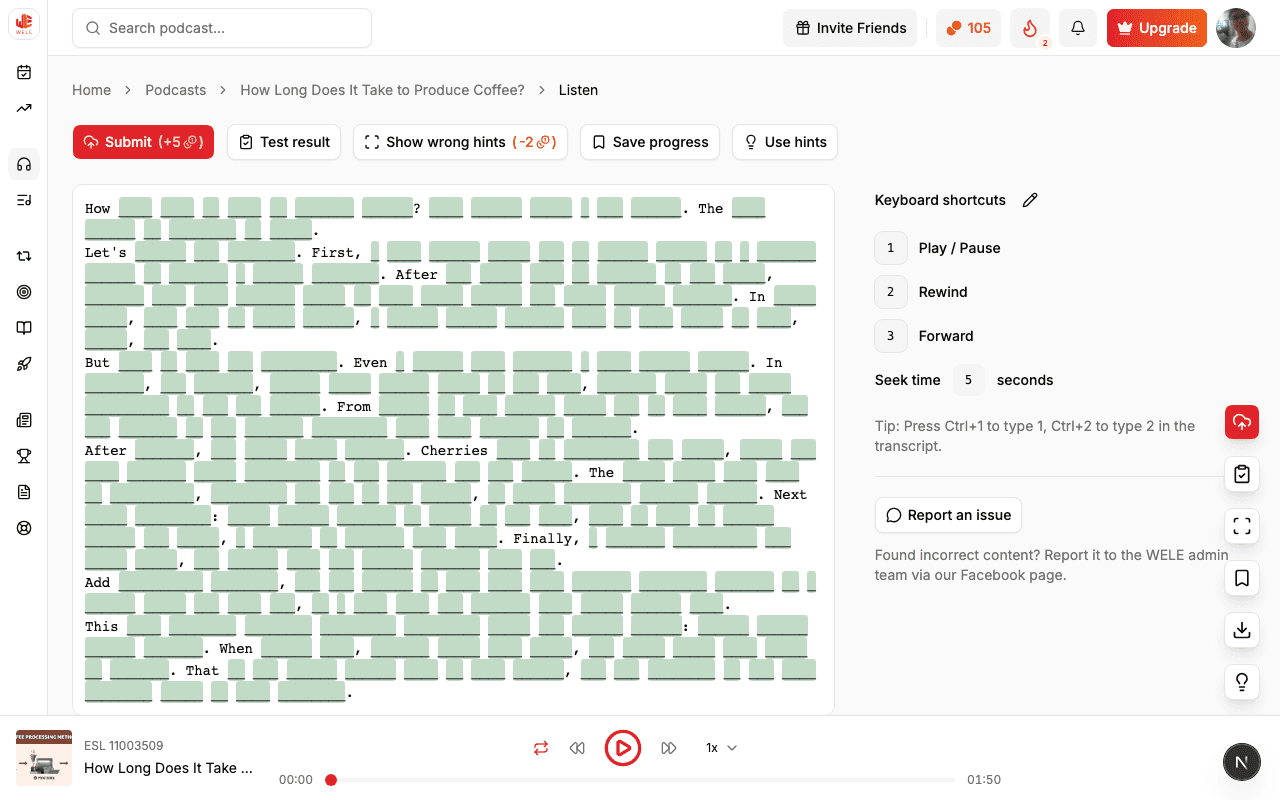
One · Listen and write
Replay a short passage as often as you need, slow it down, and type without ever leaving the lesson.
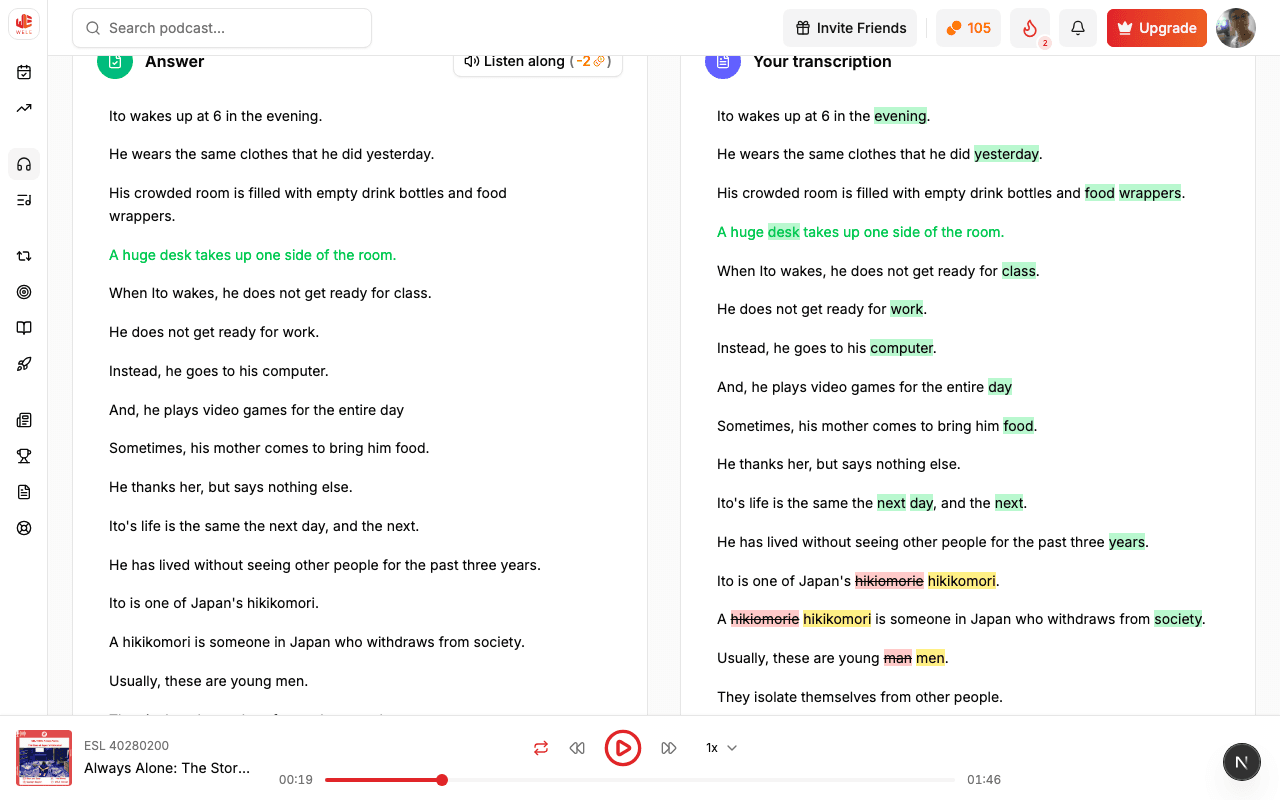
Two · Compare
Every missed particle, wrong ending, and swallowed syllable shown beside what was actually said.
The WELE method
Dictation turns listening into a prediction you can check. You commit to an answer, see precisely where it differed, and hear the passage again with new information.
Take in the whole thought before you start hunting for single words.
Put down exactly what your ear received, even when you know it is wrong.
Open the transcript and read every difference as information, not failure.
Difficult words come back later, timed to the moment before you forget them.
Anatomy of sound
Hangul spells each word as a tidy stack of syllables. Speech takes that stack apart — consonants move forward, sounds soften, whole phrases collapse. A transcript lets you stop the moment and look at it.
Field notes · spoken Korean
What the page says / what the ear receives
On the page
한국어
What you hear
한구거
On the page
좋아요
What you hear
조아요
On the page
무엇을
What you hear
뭘
None of these are mistakes. They are the rules of ordinary speech — and every one of them is learnable by ear, once you have seen where your transcription went sideways.
The listening shelf
Start where the speech is clean and slow, then move toward the recordings you actually want to understand. Everything here comes with a transcript.
01
Formal endings, an even pace, and the vocabulary the country is using this week.
Broadcast
02
Two voices reacting to each other — where liaison and contraction really live.
Conversation
03
One careful speaker, longer sentences, and the connectives that hold an argument together.
Narration
04
Dropped particles and relaxed endings that a textbook will never show you.
Casual speech
05
Slower delivery and clean recording for your first weeks of listening.
Graded audio
06
Sino-Korean vocabulary and a formal register, heard in context rather than on a list.
Documentary
What you practise
No cluttered lesson map, no endless reward loop. Tools to practise, notice what happened, and come back tomorrow.
About WELE
A language becomes yours on the day a voice stops sounding foreign.
WELE is built for learners who want contact with the language rather than completion of a course. Real recordings, an honest comparison, and the patience to hear the same passage twice.
The Korean experience has its own quiet atmosphere, but the principle is the one we apply everywhere: practise actively, understand your own mistakes, and make progress you can feel in your ear rather than on a chart.
Simple pricing
The core experience is free. Premium adds depth without turning your learning into a subscription puzzle.
Learner notes
“I had watched hundreds of hours of Korean television and still could not catch a sentence without subtitles. Writing down ten seconds at a time was the first thing that actually moved the needle.”
Elena
Intermediate learner · Madrid
“My problem was never vocabulary. It was that the words I knew stopped looking like themselves once somebody said them at speed. Seeing my transcription beside the real one made that visible.”
Marcus
Self-taught learner · Seattle
“Fifteen quiet minutes before work. No streak pressure, no cartoon rewards — just one passage and the honest difference between what I wrote and what was said.”
Priya
Preparing for study in Seoul · Bengaluru
Before you begin
Still wondering whether dictation suits your level or your routine? Start here.
Begin with a single short passage. The next time that sound comes past, it may not slip by you.
Start learning free